Pauline Vicard is Curating the Divergence with Areni Global
Words Nargess Banks
Co-founder and executive director of Areni Global, Pauline Vicard is building a research and action institute for fine wine, a convening space where unlike minds meet. We meet the founder.
We first met Pauline Vicard more than a decade ago at the Wine Library at Clerkenwell London, a design and fashion emporium where she had been appointed wine director. The space was elegant, with wine bottles neatly arranged on shelves like books, a long, gorgeous hand-crafted table set in the middle for tastings, paintings and objets d’art artfully placed on walls and shelves, classic and new vinyl lined up, scented candles burning low.
We were invited there at the launch of our book, The Life Negroni, for an evening of readings, cocktail shaking, food and wine tasting, and with a DJ spinning moody records into the night. Raised in a winemaking family in Burgundy, Vicard showed a deep wine knowledge and an instinct for how to wear it lightly. She challenged her guests to see, taste and engage. Much of the audience was new to wine, and the evening lit something up.
“Clerkenwell London was built on creating connections,” she remembers now. “If you wanted to discuss creativity, design and fashion, you would go there. And food and wine was part of that.” The shop proved too conceptual and too costly for its time and eventually folded, and yet it gave Vicard her thesis. “I was interested in connecting with people who may not have been interested in wine or drinking. There are still so many things that can fascinate them about it. With wine there is always a connection to something else, to science, history, food, people. You don’t need to like wine or even be a drinker to find an interest.”
That observation is the seed of Areni Global – the research and action institute she co-founded in 2018 and now runs as executive director. Eric Asimov of The New York Times has called it a think tank for fine wine, a phrase that captures something of its purpose. In June 2026 the French Ministry of Agriculture made Vicard a Chevalier de l’Ordre du Mérite Agricole, the distinction created in 1883 to honour significant contributions to agriculture and its wider ecosystem, in recognition of her services to wine. Areni brings together academics, winemakers, distributors, retailers, tastemakers and thinkers from around the world to consider what is shifting in fine wine, and where it might go next.
The space Areni occupies was, before it, largely empty. The fine wine world had its trade associations and its appellation bodies, its journals and its critics, and yet no convening space where the cultural, commercial and intellectual questions could be held in the same room. Where the question of who fine wine is for, and who it might yet be for, could be taken seriously. Vicard saw the gap and built it.
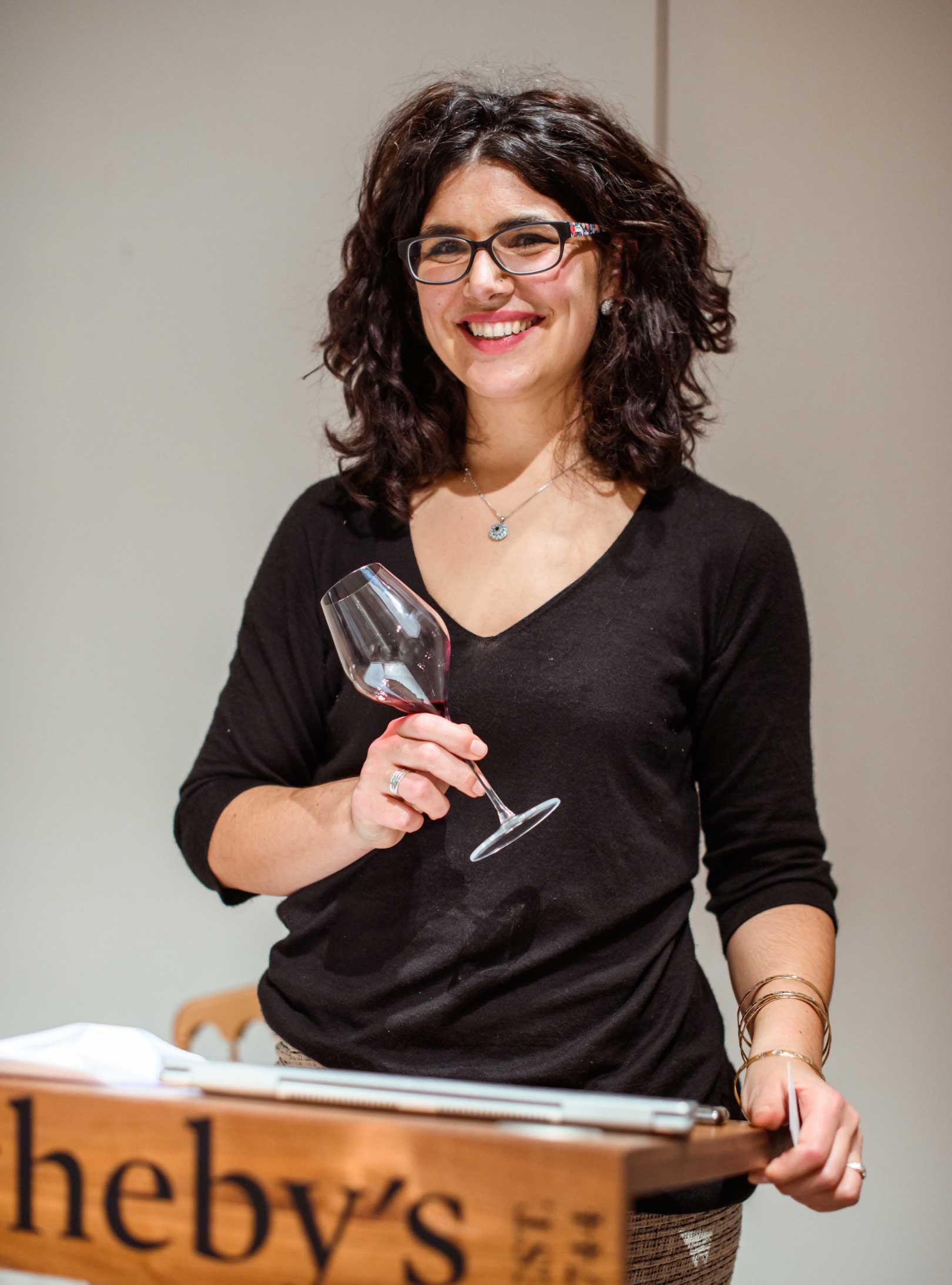
Faith in collective intentions runs through her method. “Diversity isn’t just about putting people together,” she says. “It’s paying attention to how you curate those divergences of expertise. There is value in actively searching for people who do not think like you. Otherwise you’ll end up in a bubble.” It sounds like a small distinction, but in practice, it shapes everything the institute does. Areni is built around the careful selection of voices, the patient assembly of unlike minds, and the assumption that good thinking emerges from friction rather than consensus.
Much of the institute’s work returns to a concept that has migrated, over the past decade, from the New World of wine into general use: sense of place. Vicard finds it more useful than the French term terroir she grew up with. “The French have built their trade and industry around terroir, and it’s interesting how the New World has taken possession of sense of place. It’s as though a new language has been created for their reality.” Sense of place, she explains, “is the bridge between typicity, traditionally driven by region and style, and authenticity, which you can interpret in very different ways. It builds the bridge between your identity individually and as a winery. The concept speaks to us all.”
This is more than semantics for Vicard. It is a way of thinking about what wineries actually offer when they invite a visitor in, when they bottle and ship, when they speak to the world. “When building experiences at wineries, the sense of place is taking terroir to a different level. It’s about understanding your identity, outside of soil and grape variety, but as an individual winery within a local context and community. From what I’ve seen, the world of hospitality in South African wineries reflects this well. Terroir wouldn’t allow that.”
The past pandemic accelerated questions Areni had already been asking. “People at the top in fine dining and fine wine tend to be thinkers; that’s how they get to be there,” she offers. “But, yes, the questioning accelerated during Covid. Excellence is still a major driver, and that term is being re-interpreted. Where before excellence, say in food, would have come in one shape or form, Michelin stars, white tablecloths, now it allows for more paths that don’t follow the same codes. The notion of excellence will also follow this idea of eating well, eating healthy, eating responsibly. You know the origin of the word restaurant is to restore, to restore your health, and chefs are returning to this notion.”
Wine, she believes, will and is following this path. The sommelier’s role is shifting from gatekeeper to host, from authority to storyteller. “A sommelier’s job isn’t just to open and pour wine but to make sure the wine tastes better for you. The process can take many routes: play on joy, memory, emotion. If hospitality can help you think about life positively, that adds value. And wine shouldn’t struggle to do this too much, since we have so many stories to tap into.”
The harder question, the one that runs through everything Areni does, is how the fine wine world opens up without losing the aspiration that holds it all together. “It’s a tricky question as luxury needs to be aspirational,” Vicard says. “Aspirational, though, doesn’t always translate to expensive – in certain markets price is still a big driver, elsewhere fine wine is about lifestyle. Exclusivity is always part of the game in the luxury sector. You walk a fine line between what is needed to be exclusive and what can be done to include more people in that dream and aspiration. This could mean having a second or a third wine for those who can’t access the ‘dream’ wine.”
Inclusion, in her reading, also means widening the language. The vocabulary of fine wine has been shaped by the Global North, by European reference points, by a particular type of consumer. Areni works to broaden the field. “The New World has been influenced by the Old World, and that impacts language and references. But it is changing, and this switching from terroir to sense of place symbolises that. I see more interesting and open-minded people joining the wine world, expanding the vocabulary, communicating in a global context. We are moving from a European vision of fine wine to a more international perspective.”
Then there is technology, and the harder question of reach. Only around ten percent of consumers ever travel to a winery, Vicard notes, and air travel itself is a question more wineries will need to ask themselves. The experience cannot end at the cellar door. “That is the next step. In the context of diversity, if you want the experience to be transportable, your identity needs to be visible. It needs to take other worlds and interests into account. There is so much story in wine, that is a guarantee. We just have to select the ones that engage others.”
Listening to her, Areni takes shape as a kind of room, somewhere the future of fine wine can be argued out by people who do not all think the same way. And that is the sweet spot, where wine becomes even more exciting to experience physically, emotionally and intellectually. The work is patient and distributed and cumulative. It assumes that a sector with as much cultural inheritance as wine cannot reform itself by decree, and that what it needs instead is a place to think, together, in good company. Vicard has spent her career making such rooms. She is making one now on a much larger scale.
Photography ©Pauline Vicard, Areni Global