How Distinctive Assets and Memory Structures Drive Brand Choice
Words Leigh Banks
Why distinctive assets matter, and how they keep brands top of mind at the moment of choice
Imagine you’re in Venice, standing at the mahogany counter of a historic bacaro. Bottles line the shelves, but one catches your eye before you’ve even had a chance to read the label. It’s the deep orange hue of Aperol, glowing in the late afternoon light — the same orange you’ve spotted in countless terrace shots on social media, in glossy magazines, and on bar menus from Milan to Melbourne.
You don’t need to think. The colour alone stirs a sequence of associations: spritz glasses beading in the sun, the sound of clinking ice, the taste of bittersweet citrus, the promise of the evening ahead. You didn’t choose the drink consciously; it surfaced in your mind in an instant. This is mental availability in action, driven by what marketers call distinctive assets.
Distinctive assets are the shortcuts the brain uses to find you. They are the shapes, colours, phrases, sounds and rituals that signal your brand without you having to say its name. When built and reinforced consistently, they create memory structures — networks of associations that make your brand easier to recall in buying moments.

Why Distinctive Assets Are Non-Negotiable
It’s tempting to believe great products sell themselves. In reality, people don’t weigh every choice rationally at the shelf or bar. Most decisions are quick, almost reflexive, shaped by whatever comes to mind most easily.
That’s why distinctive assets matter.
They,
- Reduce cognitive effort: the brain can spot you without needing to read.
- Trigger emotion before logic: a familiar cue can stir appetite, nostalgia, or aspiration instantly.
- Work across markets: a bottle silhouette or ritual transcends language.
- Outlast campaigns: assets, if kept consistent, can serve for decades.
The brands that win are rarely the ones with the most facts in their ads. They’re the ones with cues so embedded in memory that choosing them feels inevitable.

Types of Distinctive Assets
Distinctive assets fall into several categories, and the strongest brands use more than one.
Visual Cues
These are often the most powerful because humans are highly visual.
- Bottle Design: for example, Bombay Sapphire’s tall aquamarine bottle shape is instantly recognisable, even in low light.
- Colour: for example, Veuve Clicquot’s yellow label is so distinctive it stands out from across a crowded event.
- Typography: for example, Campari’s bold, all-caps font carries through everything from labels to billboards.
The test: would someone still know it’s you if you removed your logo?
Verbal Cues
Short phrases that carry the essence of your brand.
For example,
- Ready for Bitter? for Campari: a rallying cry for a taste tribe graduating from sweet to complex.
- Spirit of the Côte for Cap Gin: an instant passport to French Riviera glamour in four words.
The best verbal cues double as positioning statements and cultural invitations.
Sonic Cues
Sounds that trigger brand recall.
For example,
- The pop and fizz of a champagne cork in a luxury ad.
- The metallic clink of ice tongs in a gin and tonic ritual.
Sound works on a primal level, often bypassing rational thought.
Rituals
Signature ways of serving or consuming a drink.
For example,
- The orange slice in an Aperol Spritz.
- The slow pour of Guinness settling in the glass.
- The flaming of an orange peel over a Negroni.
Rituals add theatre and memorability, and once established, are hard for competitors to copy without seeming like imitators.
Contextual Cues
Places, events, or occasions that become inseparable from the brand.
For example,
- Martini’s decades-long link with Formula 1 racing.
- Laurent-Perrier’s presence at high-society summer events in the UK.
- Peroni’s link with Italian coastal dining culture.
Context cues can make your brand the default for a situation, and that’s commercial gold.
“Distinctive assets are the shortcuts the brain uses to find you,” Leigh Banks, Spinach Branding branding director
How Memory Structures Work
Memory doesn’t store brands in neat boxes. It’s a network of associations. Think “Italian summer” and your mind might trigger a chain of connected cues: warm light, relaxed afternoons, seafood, friends. Within that network, certain brands will be waiting.
The more cues you own, and the stronger they are, the greater the chance your brand will surface in a relevant situation.
Occasions matter. The strongest memory structures are linked to buying or consumption moments such as aperitivo hour, celebrations and after-work drinks. Distinctive assets should be designed to work as cues in those moments.
Why Consistency Is Your Most Valuable Asset
One of the biggest mistakes brands make is refreshing assets too often. In doing so, they destroy hard-won memory structures. Every time you change your primary colour, bottle shape or tagline, you make it harder for the brain to find you.
Consistency does not mean stagnation. Assets can be refreshed, modernised or expressed in new creative ways, but the core cues must stay constant.
Case Studies in Drinks Branding
Veuve Clicquot: The Yellow Label as Occasion Cue
The distinctive yellow appears across bottles, POS, events and advertising. Its association with celebrations makes it highly effective at surfacing during buying moments such as weddings or milestones.
Fever-Tree: Visual Minimalism as Premium Cue
The clear bottle, elegant tree illustration and understated typography work together to signal premium quality. By avoiding unnecessary elements in their packaging and design, the brand reinforces a distinctive visual identity across both retail and bar settings.
Aperol: Owning a Colour and Occasion
By linking its vibrant orange to the spritz serve and positioning it as the drink for sunny afternoons, the brand has built such a strong association that it has created a global consumption ritual.
Plymouth Gin: Heritage Through Shape and Emblem
The squat bottle and ship emblem evoke the brand’s maritime roots, so that even outside a nautical setting, these cues convey the heritage and credibility of its origin.

Building Your Own Distinctive Assets. A Step-by-Step Framework
- Step 1: Audit What You Already Have
List every current visual, verbal, sonic, ritual and contextual cue. Include those used in product design, service, comms and events.
- Step 2: Test for Recognition
Strip away your name and logo. Present the assets to customers and trade partners. If they can’t identify your brand, the asset isn’t yet distinctive enough.
- Step 3: Link to Relevant Occasions
Choose the moments you most want to own. Align your assets so they act as cues in those situations.
- Step 4: Commit to Consistency
Apply assets everywhere. The point is not to be creatively restless, but to make the cue unavoidable.
- Step 5: Protect Your Assets
Register your designs, safeguard your intellectual property, and take action against copycats. Distinctive assets are a form of intellectual property.
Testing and Strengthening Assets
Testing isn’t guesswork. You can run structured brand asset research by showing different elements to a mix of customers and non-customers, measuring:
- Fame: How many correctly link it to your brand?
- Uniqueness: How many incorrectly link it to competitors?
A strong asset scores high on both.
Once identified, strengthen by:
- Increasing visibility in key channels.
- Linking it more tightly to your core occasions.
- Removing competing variations from within your own portfolio.
How to Avoid Common Pitfalls
- Overcomplication: The more elements you try to own, the less any single one sticks. Start with one or two core cues.
- Inconsistency: A new agency or campaign that changes the tone, colour, or key visuals without reason can undo years of brand building.
- Misaligned assets: A cue that doesn’t connect to a buying occasion is less likely to be recalled at that moment.
- Copycat risk: If your assets are easy to replicate without looking like plagiarism, they’re not distinctive enough.
A Practical Exercise for Your Brand
The Distinctive Asset Map
- Draw five columns: Visual, Verbal, Sonic, Ritual, Contextual.
- Fill each with your current assets.
- Mark those that customers would recognise without your name.
- Circle those linked to specific consumption occasions.
Focus your marketing effort on reinforcing the strongest and improving or replacing the weakest.
Why This Matters Commercially
Brands with strong, distinctive assets spend less on awareness over time because their cues do more of the work. They also suffer less from competitive encroachment; imitation is obvious and often works in the original brand’s favour by reinforcing the association.
In drinks, where the choice set is huge and the buying moment often happens in seconds, this is the difference between being picked and being invisible.

Final Thought
Your brand is not just a logo or campaign; it’s a set of cues that live in people’s minds, ready to be triggered at the right moment. Distinctive assets are the handles people grab when they need to find you quickly.
Protect them, polish them and, above all, use them consistently.
Done well, they make your brand easy to choose without the customer even knowing why.
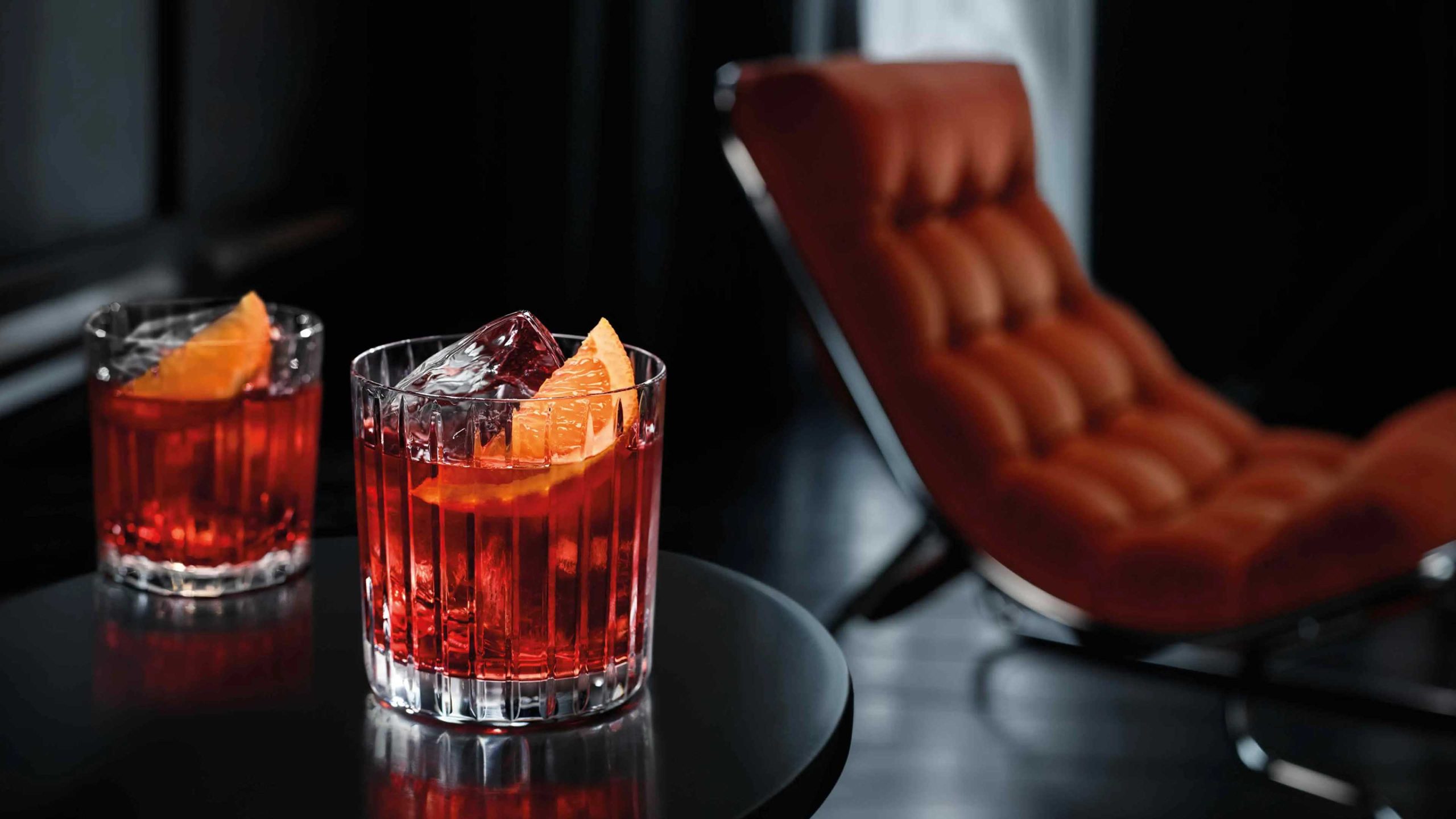
Photography from top, La Vita Campari by Spinach, Aperol Spritz, Campari ad campaign “Read for Bitter?” by Spinach, the Veuve Clicquot label, Cap Gin by Spinach. All studio photography copyright Spinach Branding

Sign up to Challengers and receive access to exclusive content, insider insights and join our community of bold thinkers