Redefining the museum not just as a space but as a brand for a new era – one that’s resonant, diverse and culturally engaged.
Words Nargess Banks
“Design affords us the chance to look at familiar things in different ways,” Tim Marlow, director & CEO, Design Museum
This autumn, the Design Museum in London opens its doors to a major new exhibition on the nightclub where, quite literally, 1980s culture began. Blitz: the club that shaped the 80s will feature objects unseen since the era and promises to introduce – or take some viewers back – to those heady days. It marks the first major exhibition on the legendary Blitz club night in London’s Covent Garden. Despite its short lifespan (just 18 months from 1979 to 1981), Blitz gave rise to a creative movement that shaped popular culture in the decades that followed. It launched the careers of Spandau Ballet, Boy George and Marilyn, alongside so many of today’s established designers and artists, filmmakers and writers.
Staging an exhibition about a short-lived nightclub may seem unorthodox for the Design Museum, but then this is an institution actively redefining its purpose. Under Tim Marlow, director and CEO since 2020, the museum has been exploring new territory – reflecting on what a design museum can and should be in a world so very different to that of 1989 when the original Design Museum opened in Shad Thames in a former 1940s banana warehouse. “I’ve always been attracted to the momentum of institutions,” says Marlow. “I like a busy place. I want to bring different audiences and for them to have communal experiences in a shared space. This is what museums do best.”
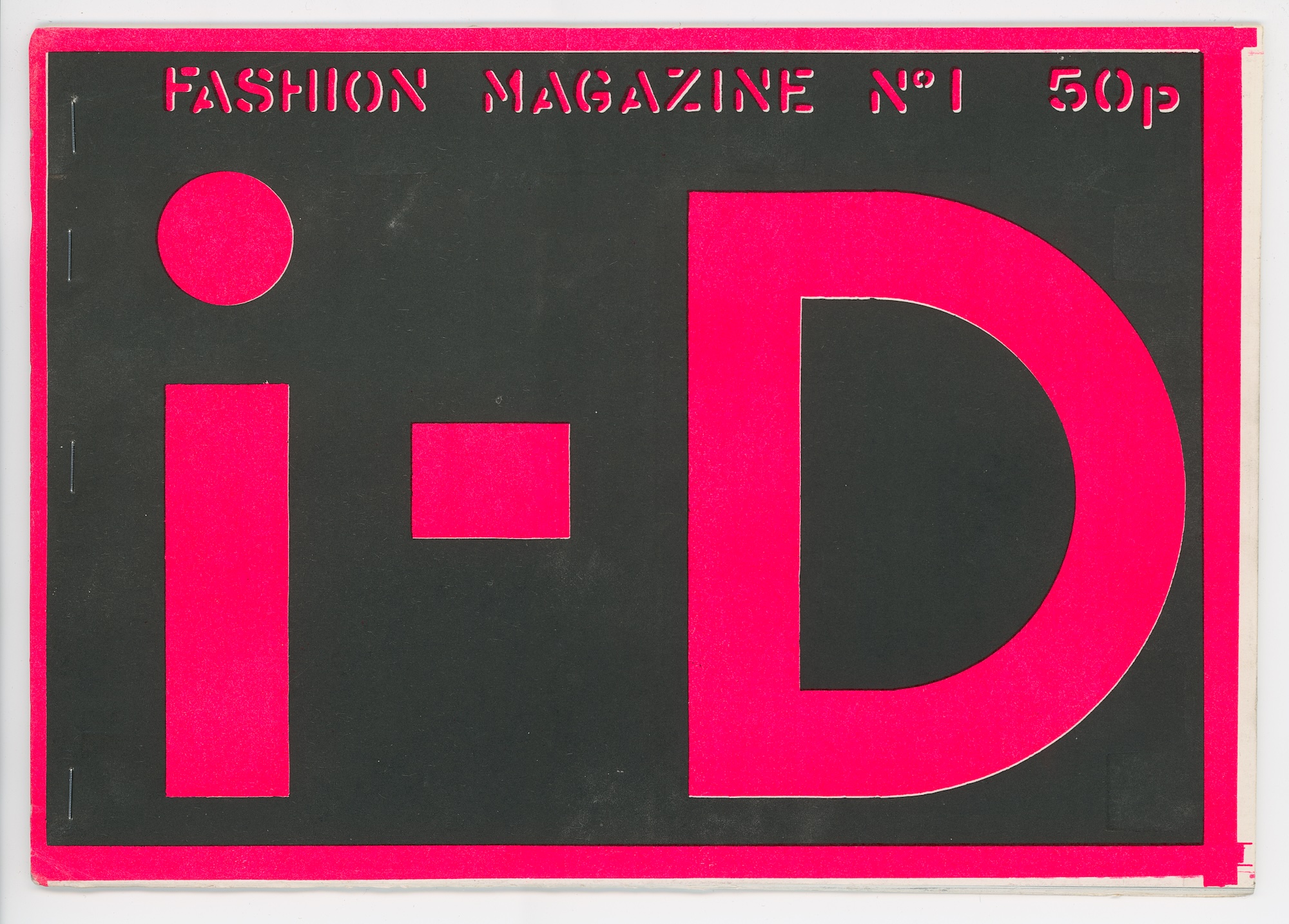
Front cover, i-D, no. 1, 1980. Design Museum Collection ©Design Museum
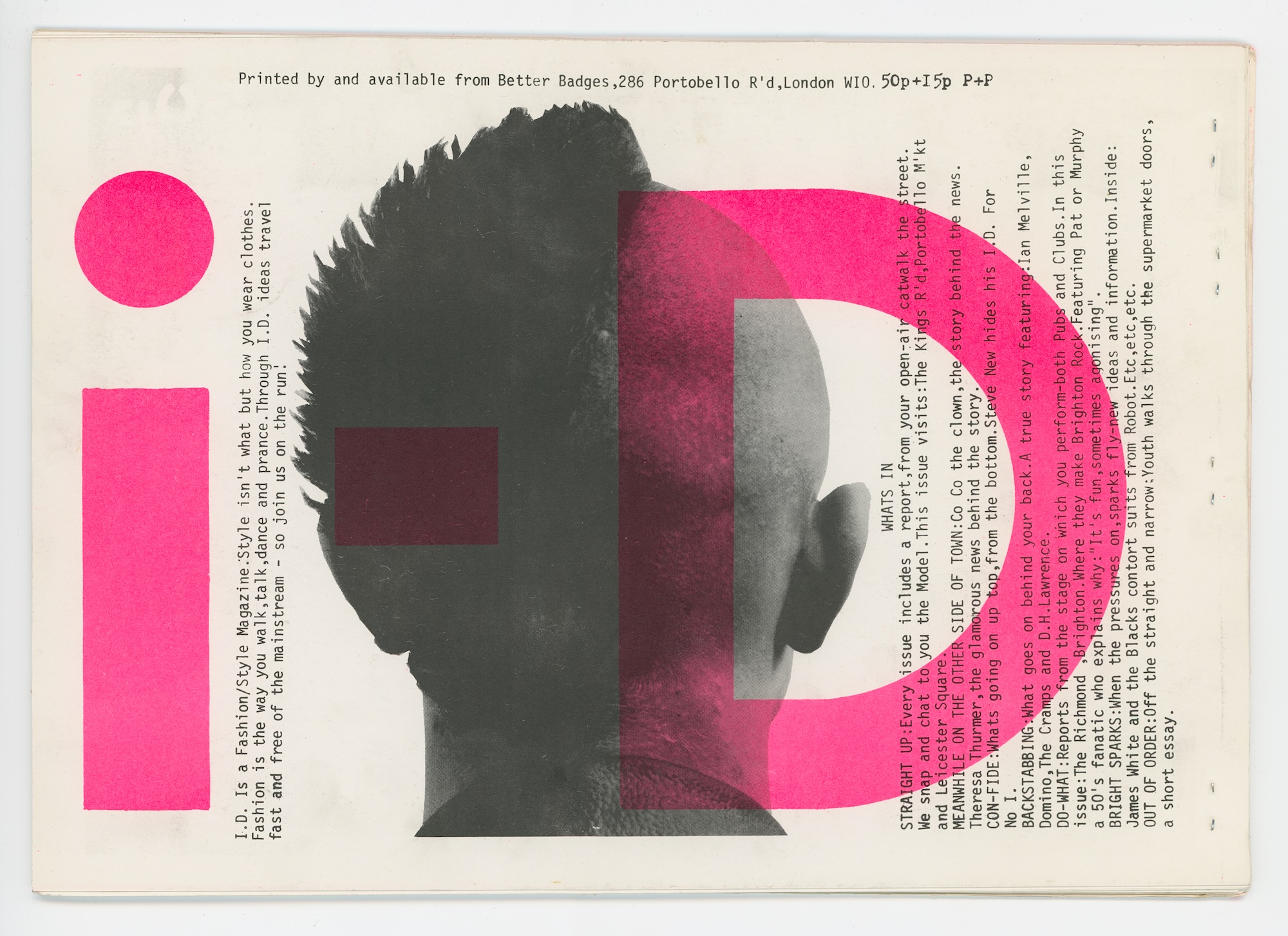
Back cover, i-D, no. 1, 1980. Design Museum Collection ©Design Museum
Changing Landscapes
I’m meeting Tim Marlow at the Design Museum’s Kensington home – the Grade II* listed former Commonwealth Institute, reimagined by architect John Pawson in 2016. A building very much of its time, it opened in 1962 to inform and educate visitors about the Commonwealth of Nations. Listing notes record its founding “at a critical moment in the evolution of the modern Commonwealth out of the old Empire”, while its design and displays projected a “sense of idealism and a new start”. It feels a fitting setting for a museum helping a nation define its place in a very different era.
I’ve yet to warm to its set-up in that although it’s tucked away on the side of Holland Park, there is no direct access or views into one of London’s loveliest green spaces. Still, the building is impressive, vast, inviting, and a stone’s throw away from some of our other significant collections of past and contemporary treasures at the V&A. Marlow’s office has expansive views over a bustling workplace where, today, his young team are busy at work. “The sheer energy that comes from different projects with different approaches, and all existing in the same building, this is what interests me,” he says.
The original Design Museum was a space dedicated to contemporary design, showcasing what many would have viewed as everyday objects. And it was a radical concept for 1989. Then, museums and galleries were reserved spaces for the high arts, the visual arts, not the applied arts and certainly not ‘common’ objects with little value. The initiative of the late Terence Conran and the design critic Stephen Bayley, that original museum was about public design education. It even paved the way for teaching design theory and history at the university level.
Marlow nods enthusiastically in agreement. Yet he’s acutely aware that what was relevant in the 1990s may not be so now. Firstly the public are design literate thanks largely to big brands such as Ikea who brought affordable design to every home. “On the one hand, the complexity of design offers us massive opportunities to tap into different audiences with each exhibition. Then, on the other hand, with the subject being so vast, how do you select what to show? It comes down to resonance, relevance, opportunity and a personal belief that this is the right thing to do at this moment.” Warming to the idea he continues, “both the pragmatic and ideological drive our ideas; the key is in presenting them in a way that takes the audience with you. I believe in design affording us the chance to look at familiar things in different ways.”
Under his leadership the Design Museum has explored a range of exhibitions. Football: Designing the Beautiful Game took a global game, a subject most can identify with, and ran with it. “Design underpins football: from its kit to technology, graphic and stadium design. It, therefore, allows us to survey the game in new ways. The same could be said of music, which is why we looked at Amy Winehouse from the lens of design,” he says, referring to the 2021 exhibition Amy: Beyond the Stage. Other past shows have included the artist Ai Weiwei taking over the museum with his first show focusing on design, inviting us to meditate on value and humanity, art and activism.
Probed on the subject, Marlow insists he’s not too concerned with attracting a mass audience via more populist shows.“If you chase a populist rather than a popular agenda, you can get found out in the museum world, and it can be dangerous. Design is such a broad subject that it can attract disparate audiences. My aim for the museum is to make it a design hub, which means looking at all different audiences, be it age, social, political and racial.”
Organic growth
On the day of my visit, the museum is surprisingly lively with visitors of all ages, including lots of uniformed kids on a school outing. I’m pleasantly surprised, as on previous expeditions, the Pawson building had felt quiet and underwhelming. I tell Marlow of my earlier observation. “This is music to my ears,” he beams. “This is what I want to generate more of. Museums have their own histories and trajectories, and I understand the ambition to scale up. When Terrance (Conran) came up with the idea, the nation didn’t have a design museum. The V&A deals with the past and present; we look at the present and future.”
Marlow is in an exciting position to assess how best to do this. In his previous role as artistic director of the Royal Academy of Arts, he helped the historic London gallery evolve to bring in younger audiences through a more expansive curatorial project. He also led the extension by another leading architect David Chipperfield which, when completed in 2018, helped expand the RA’s reach. “I need to rough up this elegant John Pawson conversion, too. There is the opportunity to put more in this space.” And bringing in new audiences and engaging with diverse groups emotionally and practically is at the top of his agenda. “We have one of the youngest and most culturally diverse audiences in any institution in London, 50% are under 35, but we have to build on this.”
Initiatives have included Entrepreneur’s Hub, where those with fewer opportunities are mentored and funded on their design projects, and Design Ventura, a programme that works closely on design education with schools. Yet, Marlow is also acutely aware of the lack of diversity in the field of design in this country. Unlike in music and fashion, where there are visible role models, with industrial and product design, and in architecture, the scene is “very monocultural,” he suggests politely with a smirk. “Liberal institutions like universities and museums cannot change the landscape, but maybe we can help.”
The Design Museum is largely a charity organisation, with profits from ticket sales going directly back into the exhibitions. The space has worked with themed exhibitions as well as single-brand retrospectives. With art budgets continuously under threat, I ask Marlow how he gauges the commercial side while maintaining an independent voice. “It must be a balanced programme. Compared to the visual arts, design offers the opportunity to work more broadly with individuals, brands, entrepreneurs, and even venture capitalists. And so it is part of the brief to explore these areas because design never happens in abstraction,” he says, reminding me that, designers have always been commissioned by or have worked with an organisation.
Marlow landed the Design Museum role only months before the closure of public spaces due to the global pandemic. And, like so many, he says it was a reflective time for him. “I realised how much design holds the key to how we deal with catastrophes and opportunities. Design is responsible for so much of the environmental damage, but it can also be the way out of it. I’d like to get to a position where I can raise enough funding so we can be the museum that examines and showcases all sorts of different ideas. We are the national design museum and should be doing this. This is what I mean by being a design hub.”
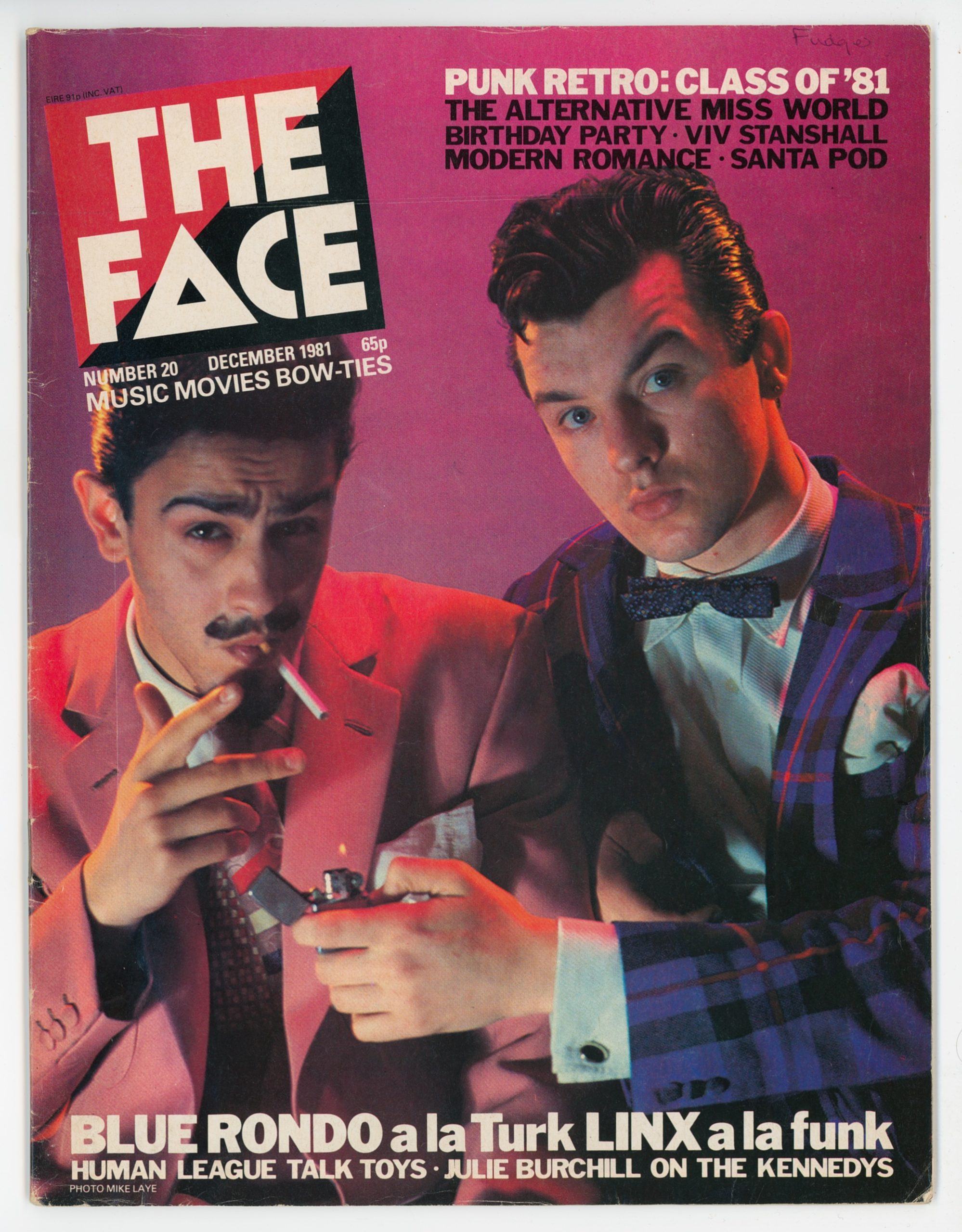
The Face, vol. 1, no. 20, December 1981. Gift of Giles Field. Design Museum Collection. Photo ©Design Museum

Sign up to Challengers and receive access to exclusive content, insider insights and join our community of bold thinkers